
Does My Plumbing Type Affect Home Insurance?
The short answer is: yes, insurers often factor your plumbing system directly into your risk rating. Older or high-risk pipe materials make leaks more likely, and while most policies cover sudden and accidental damage, they rarely cover fixing the faulty pipe itself. That means the weaker the plumbing, the more cautious your insurer becomes.
Materials insurers consider high risk:
- Polybutylene: Known for internal chemical breakdown leading to sudden failures. Many insurers refuse to cover homes with polybutylene plumbing.
- Galvanized steel: Prone to corrosion, rust buildup, low water pressure, and internal blockages. Galvanized pipes are one of the worst materials when it comes to homeowners insurance.
- Lead piping: Rare today but still present in older homes; insurers categorically reject lead pipes due to health hazards.
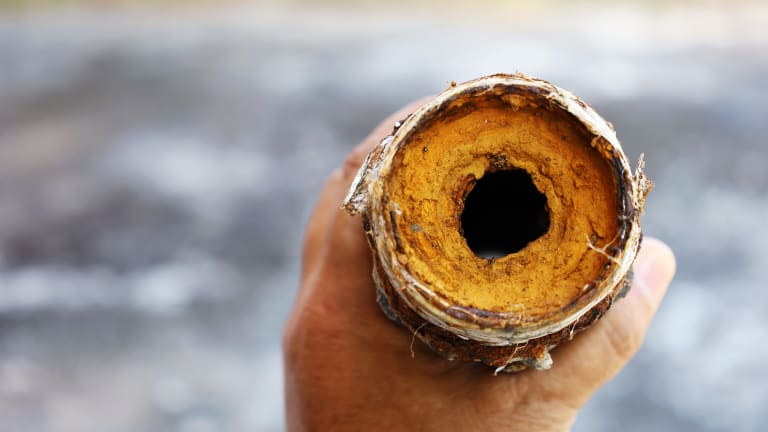
Some insurers won't cover homes with these systems at all, while others may increase premiums or restrict water-damage coverage. Polybutylene is particularly problematic; in many regions, insurers require a full repipe before issuing a policy.
As a result, homeowners with high-risk plumbing often face:
- higher premiums
- limited coverage for water damage
- denied claims related to corrosion or deterioration
- requirements to upgrade the system before renewal
Homes with preferred plumbing, like PEX or copper pipes, are generally considered lower risk because these materials resist corrosion, handle pressure changes well, and have long lifespans. Insurers typically offer more favorable policies when these materials are in place. For more details, jump to our section about preferred plumbing for insurance.
Will Replacing Old Pipes Lower My Home Insurance Cost?
Replacing old or risky pipes can help reduce premiums and improve your insurance options. While not all insurers offer formal discounts, removing a known liability such as galvanized steel or polybutylene significantly lowers the risk of future claims, which often leads to better pricing.
A repipe can also resolve coverage issues. Homes that were previously uninsurable - or only insurable under restricted policies - often become fully eligible once modern materials are installed. It may also open the door to broader water-damage coverage or fewer exclusions.
Beyond premiums, repiping protects you from costs insurance doesn't cover. Policies generally pay for sudden water damage, but not for repairing or replacing the failing pipes that caused it. Upgrading your plumbing eliminates ongoing leak risks and reduces the likelihood of multiple out-of-pocket repairs.
Modern repipes are fast, minimally invasive, and designed to last for decades. Most of our repipe projects are completed within one or two days, including inspections and wall restoration, offering long-term financial and structural benefits.
What Pipe Materials Do Home Insurers Prefer?
Insurers typically favor plumbing materials that are reliable, durable, and less prone to sudden failures. These materials have a strong track record and are known to withstand decades of use without significant structural issues.
Materials insurers prefer:
- PEX (cross-linked polyethylene): Flexible, corrosion-resistant, and quick to install. PEX handles freeze-thaw cycles well and has one of the lowest failure rates among modern systems. Insurers generally view PEX as a very low-risk material.
- Copper: A long-trusted material with an average lifespan of 50+ years. Copper is durable and highly resistant to bacterial growth. While more expensive than PEX, it is also widely accepted and viewed positively by insurers.
Understanding what insurers look for can help you avoid unexpected coverage issues. If your home contains any high-risk materials, replacing them before they fail can improve both coverage and your home's long-term resilience.
We repipe using either American-made Type L copper pipe or Uponor PEX-A tubing, depending on your personal preferences. For more information, give us a call today, and one of our local repipe consultants can answer all your repipe questions.
Get your free estimate today
With over 80,000 repipes completed, we've perfected our One-Stop Repipe™ for your home.
Get a Quote to Replace Old or High-Risk Pipes
If your home has older plumbing - or you're unsure what's in your walls - now is the best time to act. Replacing high-risk pipes protects your home and can help improve your insurance options. At Repipe Specialists, we've completed over 80,000 repipes using reliable PEX and copper. Our customers consistently highlight:
- Speed: Our repipe crews typically complete a repipe in a day, returning on another day for wall patching.
- Convenience: Through our One-Stop Repipe™ Process, we handle everything from permits, to wall patching, to inspections.
- Cleanliness: Our crews are trained to protect your home while working (we cover all surfaces with protective sheeting), and to clean up fully at the end of each day.
- Peace of Mind: Repipe Specialists is a fully licensed plumber in every state we operate in, and we back all of our repipes with a lifetime warranty.
- Financing programs: To help take the sting out of unplanned repipe expenses, we offer several financing programs.
- Price: As a specialist that performs hundreds of repipes a week, we can deliver high-quality repipes at a lower cost vs generalist plumbers. Our quotes typically range from $4,500 to $15,000 depending on the size and complexity of your project. We have an article that covers repipe cost factors in detail.
Schedule a free, no-obligation quote today. Upgrading your plumbing is one of the most reliable ways to reduce risk, protect your home, and stay fully covered by your insurer.