

What Does Repiping Water Lines Actually Involve?
To put it simply: repiping water lines means removing your home's aging water supply system and installing a completely new network of pipes that connects to every plumbing fixture in your home.
Repiping is not a patch job or a single-pipe replacement. A full home repipe involves systematically rerouting new piping through walls, ceilings, attics, crawlspaces, or subfloors to reach every fixture in your home, including sinks and basins, showers and baths, toilets, washing machines, dishwashers, outdoor hose bibs, and water heater connections.
In most homes, the old pipes are left in place (and disconnected) while the new system is installed alongside them. This helps avoid unnecessary demolition and allows the work to be completed quickly and cleanly.
A professional repipe team - much like ours - will also:
- Install new shut-off valves and supply lines
- Connect the system to your main water line
- Pressure test the entire home
- Patch and repair any small wall access points
- Arrange inspections and permits where required
Because our One-Stop Repipe™ Process is highly specialized, most single-family homes can be fully repiped in 1-2 days, with water restored at the end of each day.
Why Would a Home Need Its Water Lines Repiped?
Most homes don't need a repipe because of one leak. They need a repipe because the plumbing system as a whole has reached the end of its usable life.
Many homes built before the 1970s still contain galvanized steel pipes, which corrode internally over time. Homes built in the 1980s and 1990s may have polybutylene or CPVC, both of which are now known for their high failure rates. Even trusted older copper pipes can develop pinhole leaks after decades of use, especially under certain water conditions.
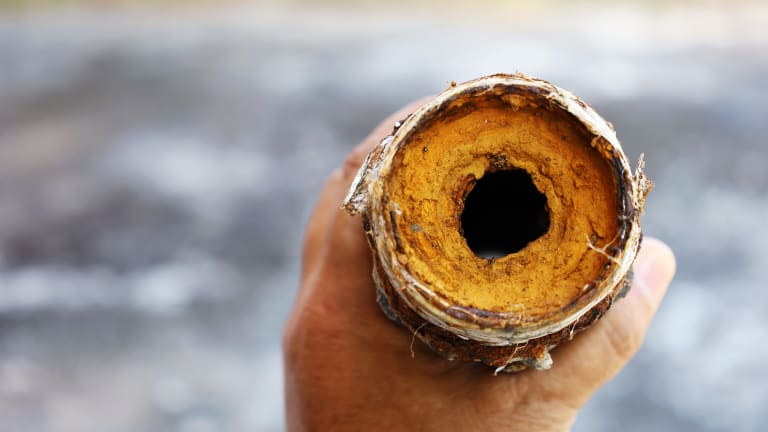
Some common signs your home may need repiping include:
- Rusty, brown, or discolored water
- Low water pressure throughout the home
- Slab leaks or water damage from hidden leaks
- Frequent leaks in different areas
- Visible corrosion on exposed pipes
- Outdated plumbing materials like galvanized, polybutylene, or CPVC
When leaks start appearing in multiple places, repairing each one can quickly become far more expensive than replacing the entire system. A full repipe eliminates the ongoing cycle of water damage repairs, drywall repairs, and emergency plumber visits.
Repiping vs Pipe Repair vs Pipe Relining: What's the Difference?
Homeowners are often presented with three very different plumbing solutions and told they are interchangeable. They are not.
Each one applies to a different type of pipe, a different problem, and a different long-term outcome for your home's water lines.
Understanding the difference is critical, because choosing the wrong solution may mean spending a lot of money without actually solving the underlying issue in your home.
Pipe Repair: for isolated damage, not aging plumbing systems
A traditional plumber is highly skilled at locating and repairing a single leak or damaged section of pipe. If a pipe has been accidentally punctured, a fitting has failed, or one small section is leaking, a repair may be the right solution for you.
However, repairs are designed for localized problems - not systemic ones.
If your home has multiple leaks in different areas, corroded galvanized pipes, pinhole copper leaks, failing polybutylene or CPVC, or leaks under the slab, then repairing one section simply moves the problem somewhere else.
This is why many homeowners find themselves calling a plumber every few months for a new leak in a new location. A repair treats the symptom; it does not address the fact that the entire water line system is deteriorating. For more information, read our detailed article about choosing a plumber or a repipe company.
Pipe Relining: a solution for drain and sewer lines - but not for water supply pipes
Pipe relining (or pipe coating) is a good, modern solution for waste and sewer drain pipes. These pipes are rarely under pressure and are designed to carry water away from your home.
When a drain line cracks, suffers root intrusion, or begins to fail, relining allows plumbers to create a new pipe inside the old one without excavation. For sewer and drain problems, relining is often the most effective and least disruptive option available.
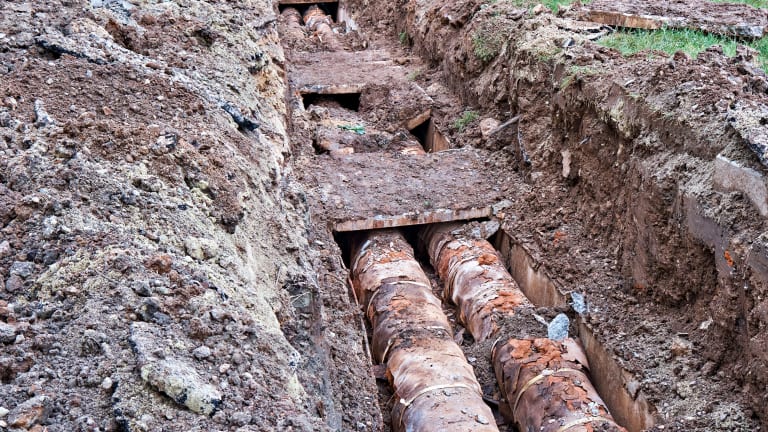
However - and this is where confusion often arises - relining cannot be used for your home's fresh water supply lines.
Water supply pipes are constantly under pressure. They must maintain clean, potable water standards and structural integrity. For this reason, pressurized water lines cannot be relined or coated. When they fail, they must be fully replaced.
So, while relining is the best option for drains, it is not a solution for the pipes that bring clean water into your taps.
Repiping: the only long-term solution for failing fresh water lines
When the issue is not one pipe but the condition of your entire plumbing network, repiping is the only permanent solution.
This is where the difference between a general plumber and a repipe specialist becomes important.
A plumber is trained to fix problems as they appear. A repipe company - much like ours - is designed to assess the overall health of your plumbing system and replace it entirely when it has reached the end of its lifespan.
At Repipe Specialists, this means:
- Identifying outdated materials like galvanized, polybutylene, or CPVC
- Replacing pipes with modern PEX or new Type L copper
- Installing a completely new pressurized water line system to every fixture
- Eliminating the cycle of recurring leaks and water damage
Rather than chasing leaks around the house, repiping removes the root cause altogether. It's not about patching the visible issue; it's about restoring the integrity of your entire plumbing system so you don't have to think about it again for decades.
When repairs stop making financial sense, and relining isn't applicable to water supply pipes, repiping becomes the clear, long-term solution.
Contact us to schedule a consultation with one of our local repipe specialists and receive a written quote, either in-home or remotely.
Get your free estimate today
With over 80,000 repipes completed, we've perfected our One-Stop Repipe™ for your home.
Get a Quote for Repiping Your Home's Water Lines
Since 1991, Repipe Specialists has upgraded the water lines in tens of thousands of homes using high-quality PEX-A tubing and Type L copper, giving homeowners a long-term solution to aging, leaking, or unreliable plumbing systems. Because repiping is all we do, we've refined a process designed specifically for full water line replacement — one that focuses on speed, protection of your home, and long-term reliability:
- Speed: Our repipe crews typically complete a repipe in a day, returning on another day for wall patching.
- Convenience: Through our One-Stop Repipe™ Process, we handle everything from permits, to wall patching, to inspections.
- Cleanliness: Our crews are trained to protect your home while working (we cover all surfaces with protective sheeting), and to clean up fully at the end of each day.
- Peace of Mind: Repipe Specialists is a fully licensed plumber in every state we operate in, and we back all of our repipes with a lifetime warranty.
- Financing programs: To help take the sting out of unplanned repipe expenses, we offer several financing programs.
- Price: As a specialist that performs hundreds of repipes a week, we can deliver high-quality repipes at a lower cost vs generalist plumbers. We have an article that covers repipe cost factors in detail. Our quotes typically range from $4,500 to $15,000, depending on your home's size and complexity.
Book a free in-home consultation today, and one of our local repipe experts will walk you through your options and provide a clear, fixed-price written quote for repiping your home's water lines.