
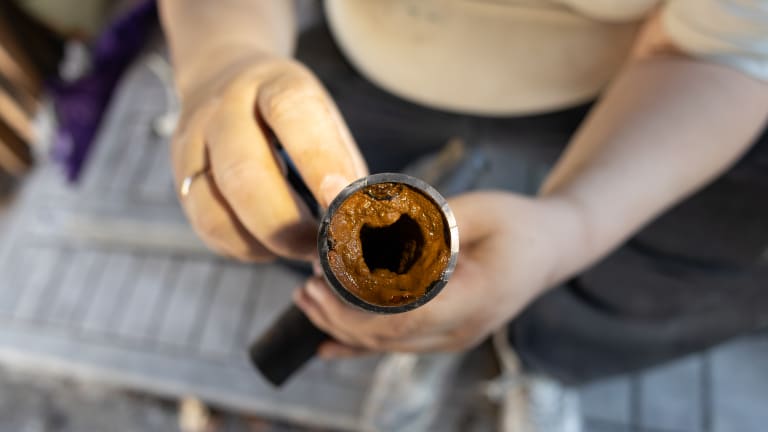
What Are the Signs Hard Water Is Damaging Your Pipes?
Hard water damage rarely happens all at once; instead, it builds up gradually as minerals accumulate inside your plumbing system. Over time, this leads to performance issues that many homeowners might mistake for general wear and tear. Recognizing the early warning signs can help you prevent more serious pipe damage and costly repairs.
Below are just some of the common indicators that hard water is already affecting your plumbing system:
- Low water pressure throughout the home: One of the earliest and most common signs is reduced water pressure. As calcium and magnesium deposits build up inside pipes, they narrow the internal diameter and restrict water flow, making showers weaker and taps slower.
Calcium plugs caused by hard water - Slow-filling sinks, bathtubs, and appliances: If water is taking longer than usual to fill basins or appliances, internal scale buildup may already be limiting flow. This is especially common in older piping systems affected by years of hard water exposure.
- Frequent clogging of showerheads and taps: Mineral deposits often collect at fixture outlets, causing visible blockages and uneven spray patterns. While cleaning fixtures can help temporarily, the underlying issue often lies deeper within the plumbing system.
- Discolored, cloudy, or rusty-looking water: Hard water can accelerate corrosion in older pipes, particularly copper or galvanized systems. This may lead to discolored water appearing intermittently from taps.
- Reduced efficiency or failure of water-using appliances: Dishwashers, washing machines, and water heaters are highly sensitive to mineral buildup. Over time, limescale reduces efficiency, increases energy usage, and shortens appliance lifespan.
- Frequent leaks or pinhole pipe failures: In more advanced cases, hard water can contribute to corrosion inside pipes, particularly copper systems. This can eventually lead to pinhole leaks that often appear behind walls or under floors.
- Visible mineral buildup on fixtures and exposed pipes: White, chalky deposits around taps, showerheads, and visible pipework are strong indicators that similar scale buildup is forming inside your plumbing system as well.
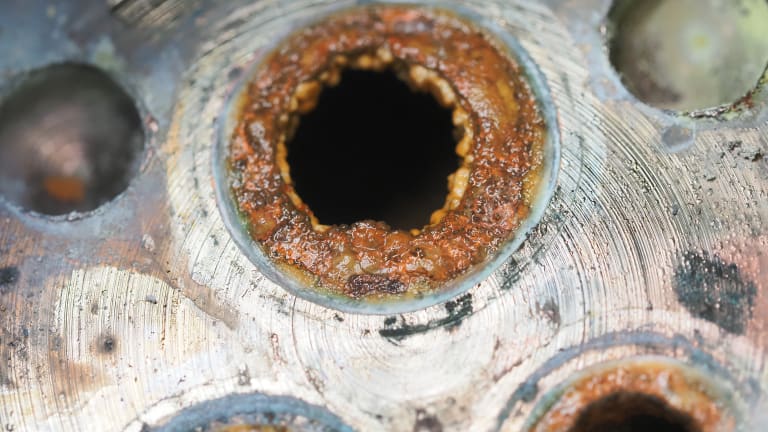
Taken together, these symptoms often point to a broader issue affecting the entire plumbing system rather than isolated fixture problems.
Which Pipe Materials Are Best for Homes With Hard Water?
When it comes to hard water, not all plumbing materials were created equal. Making the right decision can significantly reduce scale buildup, corrosion, and long-term damage to your system.
PEX piping is generally considered the best option for homes with hard water. Its smooth interior surface makes it harder for minerals like calcium and magnesium to adhere, which helps slow the formation of limescale and maintain better water flow over time. PEX is also flexible and requires fewer joints, reducing additional points where buildup can occur.
Copper pipes are still widely used in homes across the country and can last many years. However, they are more vulnerable to mineral buildup and corrosion in hard water environments. Over time, this can lead to restricted flow and issues like pinhole leaks, particularly in older systems.
Galvanized steel performs the worst under hard water conditions. It is highly prone to internal corrosion and heavy scale accumulation, often leading to significant flow restriction and eventual pipe failure.
While no material is completely immune to hard water, modern PEX systems—especially Uponor PEX-A systems—offer the most reliable long-term protection and performance in affected homes.
When Should You Repipe a Home With Hard Water Damage?
Many homeowners attempt to manage hard water issues through repeated plumbing repairs, fixture replacements, or drain cleaning services. However, there will always come a point where repairing isolated sections of pipe is no longer cost-effective.
If your plumbing system is experiencing widespread hard water damage, a full home repipe is the smartest long-term solution.
Here are five key signs it may be time to consider repiping your home:
- Frequent leaks across multiple areas of the home: If leaks keep appearing in different sections of your plumbing, it often indicates system-wide deterioration rather than isolated failures.
- Consistently low or uneven water pressure: Persistent pressure issues usually point to internal scale buildup that is restricting flow throughout the pipe network.
- Recurring plumbing repairs: If you are repeatedly calling a plumber for pipe or fixture issues, the underlying system may be nearing the end of its usable life.
- Discolored or rust-tinted water: This can indicate internal corrosion within older pipes, particularly galvanized steel or aging copper systems.
- Older plumbing system showing widespread scale or corrosion: If your home still relies on outdated piping materials, hard water damage is likely more advanced and system-wide rather than localized.
Repipe Your Home Today
One of the biggest misconceptions homeowners have is believing that limescale buildup inside pipes can be fully cleaned out.
In reality, once heavy mineral accumulation develops inside aging pipes, there is no reliable way to completely restore the plumbing system internally. In many cases, pipe replacement becomes the only effective long-term option.

Whole-home repiping is often more affordable than homeowners may think, especially compared to the ongoing expense of repeated leak repairs, water damage restoration, and failing appliances. Replacing the plumbing system proactively can also improve water pressure, reliability, and overall system performance throughout the home.
For homes with severe hard water exposure, replacing outdated plumbing with modern PEX piping is one of the best decisions you can make for your home's plumbing health.
Contact us today to schedule a consultation with one of our local repipe consultants and receive a free written quote, either in-home or remotely.
Get your free estimate today
With over 80,000 repipes completed, we've perfected our One-Stop Repipe™ for your home.
Get a Long-Term Solution for Hard Water Plumbing Problems
At Repipe Specialists, we have completed thousands of whole-home repipes for homeowners dealing with aging, corroded, and hard-water-damaged plumbing systems. Our team specializes exclusively in repiping, allowing us to provide efficient installations and long-lasting plumbing solutions using modern PEX systems. We regularly exceed our customers' expectations when it comes to:
- Speed: Our repipe crews typically complete a repipe in a day, returning on another day for wall patching.
- Convenience: Through our One-Stop Repipe™ process, we handle everything from permits to wall patching to inspections.
- Cleanliness: Our crews are trained to protect your home while working (we cover all surfaces with protective sheeting), and to clean up fully at the end of each day.
- Peace of Mind: Repipe Specialists is a fully licensed plumber in every state we operate in, and we back all of our repipes with a lifetime warranty.
- Financing Programs: To help take the sting out of unplanned repipe expenses, we offer several financing programs.
- Price: As a specialist that performs hundreds of repipes a week, we can deliver high-quality repipes at a lower cost than generalist plumbers. Our quotes typically range from $4,500 to $15,000 depending on the size and complexity of your project. We have an article that covers repipe cost factors in detail.
Schedule a free in-home consultation today. Our team can evaluate your plumbing system, explain your replacement options, and provide a written fixed-price quote for a whole-home repipe.