
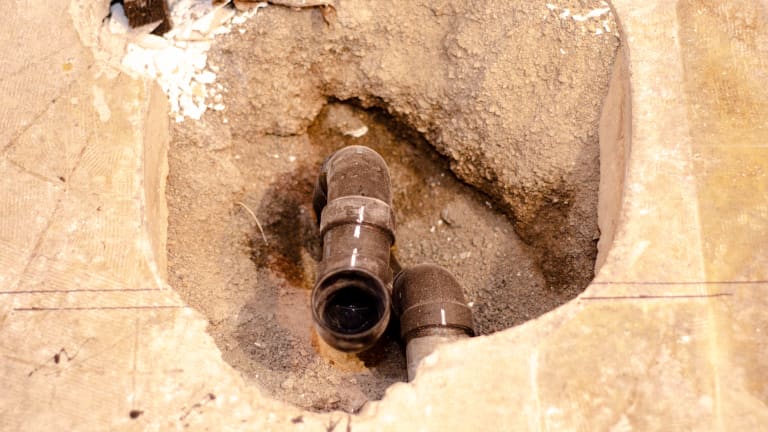
What Causes a Leak in a Slab?
Leaks in slab occur when the pipes running in or under your home's concrete foundation fail. They can affect pressurized fresh water lines as well as sewer and drain pipes. This guide focuses on fresh water lines in your home, since those are under constant pressure.
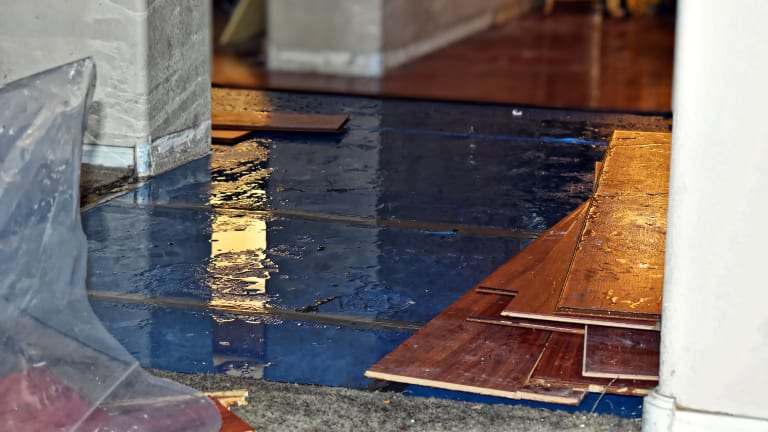
Because the pipes are buried, these leaks are much harder to detect and repair than those in a wall or attic. Some causes can occur anywhere in your plumbing system:
- Aging pipes: Old copper, corroded galvanized steel and defective polybutylene piping are all prone to failure. Aging drain and sewer lines under the slab can leak too.
- Poor installation: Improperly installed lines and fittings are more likely to fail over time.
- High water pressure: Excessive pressure strains pipes and fittings, and can cause leaks or bursts.
- Pipe abrasion: Pipes that rub against the concrete or each other wear down until they leak.
- Water chemistry: Chlorine levels and the pH of your water supply can speed up deterioration. Copper pinhole leaks and polybutylene failures have often been linked to it.
Leaks in Slab: Where You Live Matters
Other causes are unique to pipes embedded in or under concrete, and they usually come down to ground movement. Expansive clay soil swells when wet and shrinks as it dries, pushing and pulling on the slab and the pipes beneath it. Pockets of organic matter underground can oxidize or compact, causing the soil above to settle.
The scale of the problem is striking. The Colorado Geological Survey estimates that expansive soil causes infrastructure losses greater than tornadoes, floods, earthquakes and hurricanes combined.
Where you live matters. Clay soils are common nationwide, with particularly high rates in Texas, Oklahoma and parts of California. Some areas of Florida combine highly expansive smectite clay with organic matter left behind by former wetlands.
In earthquake-prone regions such as California, Nevada, Washington State and Utah, seismic activity can crack and shift a slab, damaging the plumbing beneath it. In these cases the cause is beyond your control, which is why fixing a single leak often doesn't end the problem.
Can You Fix a Leak in a Slab Without Breaking Concrete?
Traditional slab repair is known as spot repair, or in-slab repair. A contractor locates the leak, jackhammers through the slab and floor covering, replaces the damaged section of pipe, then patches the concrete and refinishes the floor. It's noisy, dusty and incredibly disruptive.
It also fixes only the section that failed. The factors behind the first leak, such as soil movement, water chemistry and pipe age, are still acting on the rest of the pipework, so another failure nearby is a real possibility. We consider an in-slab repair a temporary fix compared with a full repipe.
Permanent Solution: Repipe Through Walls
The alternative is to stop relying on the slab at all. A whole-home repipe leaves the concrete intact. At Repipe Specialists, we cap off the fresh water lines already in or under your slab and leave them in place, then run brand-new plumbing through your walls, ceilings and attics.
Because the new lines never touch the slab, a shifting foundation doesn't damage them. We believe it's the only effective way to prevent future slab leaks, short of not having a slab foundation in the first place.
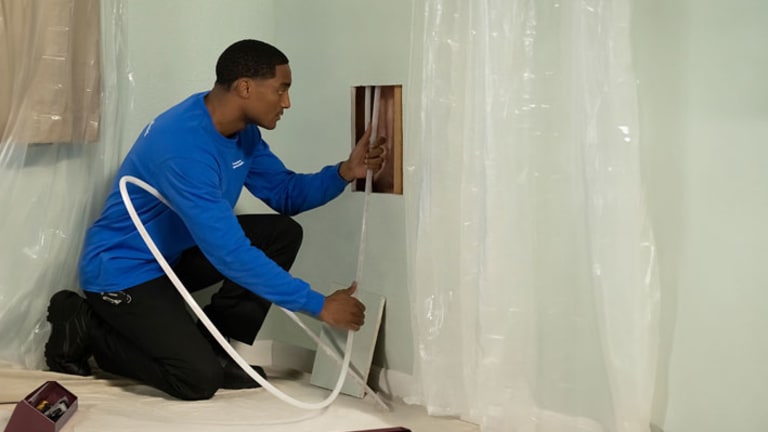
Repiping is also less disruptive than it sounds. With our One-Stop Repipe™ process, a full home is typically completed in one to two days. We return on another day for wall patching and handle everything from inspections to permits.
Cost is often the deciding factor. Most of our whole-home repipes range from about $4,500 for smaller homes to $15,000 for larger properties with more complex requirements and longer pipe runs.
Customers have told us a full repipe sometimes cost less than replacing one section of damaged pipe in the slab, particularly if they'd already paid for several in-slab repairs. Give us a call for a free repipe quote for your home.
Get your free estimate today
With over 80,000 repipes completed, we've perfected our One-Stop Repipe™ for your home.
Does Homeowners Insurance Cover a Leak in a Slab?
Coverage varies by policy and provider, so it is important to check your own policy and speak to your insurer. As a general rule, standard homeowners policies cover sudden and accidental water damage, such as a pipe that bursts and ruins your flooring. However, they are much less likely to pay for fixing the failing pipe itself.
Leaks caused by long-term wear, corrosion or gradual deterioration are often excluded as maintenance issues. Damage from soil movement or earthquakes is commonly excluded as well, and may require separate coverage.
Some policies cover the cost of accessing the leak, such as breaking through the slab, even when they won't pay for the pipe. Others cover resulting damage to floors, walls and belongings but nothing at the source. Read the sections on water damage, exclusions and tear-out coverage in your policy to find out what is covered.
If you suspect a slab leak, these steps will protect both your home and any claim:
- Stop the damage. Shut off the main water supply if you can, and move belongings away from affected areas.
- Document everything. Take dated photos and video of visible damage, and keep a record of your recent water bills.
- Contact your insurer promptly. Delays can complicate a claim, and many policies require you to act quickly to limit the damage.
- Get a professional leak assessment. A licensed plumber's written findings on the location and cause of the leak give your insurer a clear basis for assessing the claim.
- Ask before authorizing repairs. Find out what your policy will and won't cover before work begins.
If your home has recurring slab leaks or deteriorating pipes, a whole-home repipe may offer a more reliable long-term solution. Contact us today for a free in-home consultation and a written, fixed-price quote.
Get a Quote for Your Whole-Home Repipe Today
Leaks in slab aren't just stressful; they can destabilize your life. That's why it is important to act and take preventative measures before a hidden leak becomes a disastrous situation. Since 1991, Repipe Specialists has replaced the plumbing in over 80,000 homes using both copper piping and PEX tubing. Homeowners tell us we often exceed their expectations in these areas:
- Speed: Our repipe crews typically complete a repipe in a day, returning on another day for wall patching.
- Convenience: Through our One-Stop Repipe™ process, we handle everything from permits to wall patching to inspections.
- Cleanliness: Our crews are trained to protect your home while working (we cover all surfaces with protective sheeting), and to clean up fully at the end of each day.
- Peace of Mind: Repipe Specialists is a fully licensed plumber in every state we operate in, and we back all of our repipes with a lifetime warranty.
- Financing Programs: To help take the sting out of unplanned repipe expenses, we offer several financing programs.
- Price: As a specialist that performs hundreds of repipes a week, we can deliver high-quality repipes at a lower cost than generalist plumbers. Our quotes typically range from $4,500 to $15,000 depending on the size and complexity of your project. We have an article that covers repipe cost factors in detail.
Schedule a free in-home consultation, and one of our local repipe consultants will explain all your options and provide a written, fixed-price quote. Fix slab leaks at the source and repipe now.